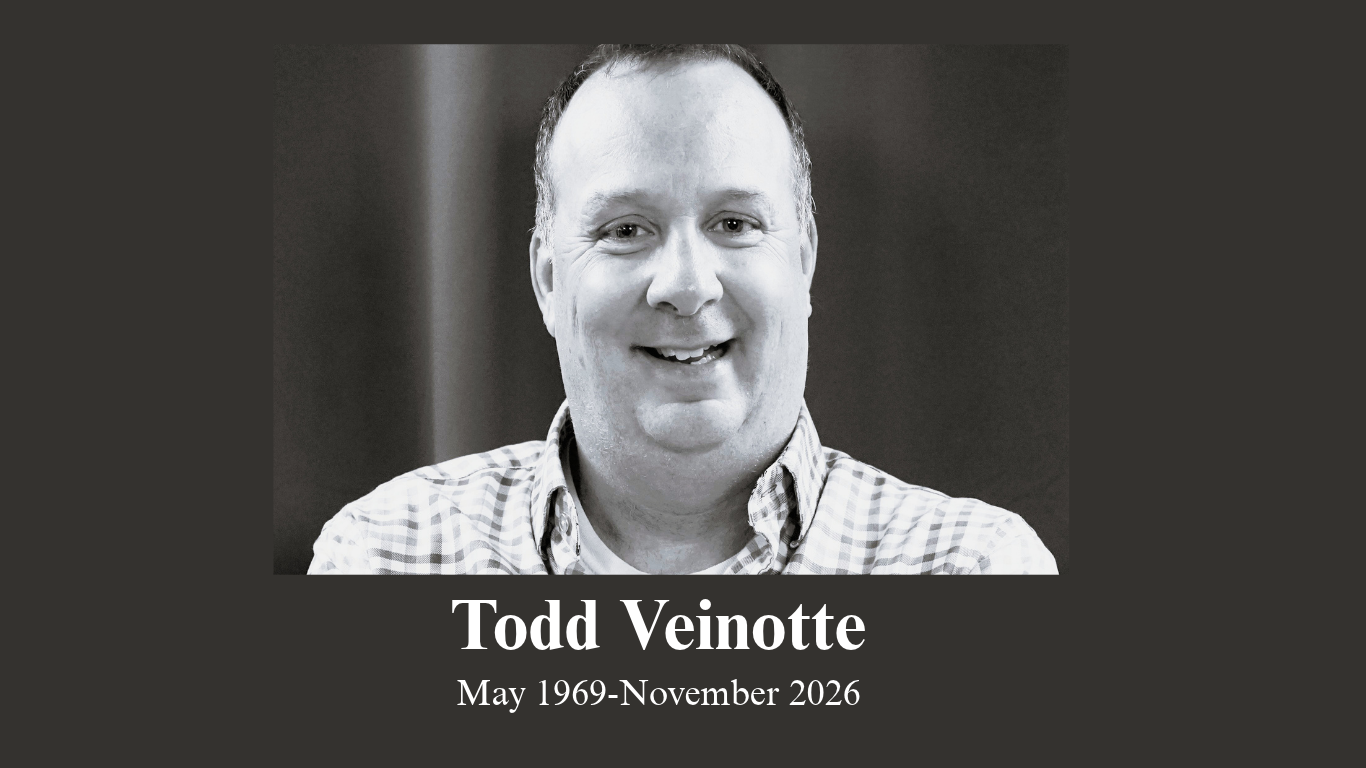
Longtime broadcaster and former co-host Mortgage 101 Todd Veinotte passed away on Nov 16
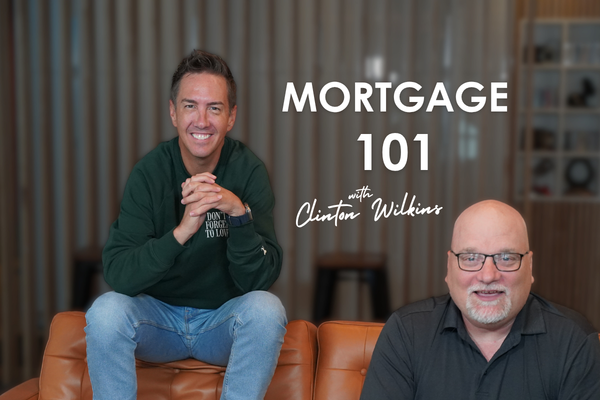
Mortgage 101 – Rent vs. Own in Halifax
Clinton and Dan discuss the financial implications of renting versus homeownership and identify resources for first-time buyers.
Dan Ahlstrand
And we’re back to Mortgage 101 East Clinton Wilkins. I’m Dan Ahlstrand. We haven’t talked about renters. There’s a big population of renters, particularly here in Halifax. It’s back to school, and the universities are brimming with students. I saw some stats, Clinton, earlier this week showing that the rest of the country’s rents are falling. Here in HRM, not the case. Up 4.4% year over year. I think we still have the second or the third highest rent in the country. How different is it to be a renter, when it comes to how much you’re forking out every month, than to? I often hear I’m a renter, and I often hear Well, why don’t you just buy a house because you’re giving all that money away? Right. What’s your advice on that?
Clinton Wilkins
Well, historically, homeowners have a higher net worth than renters.
Dan Ahlstrand
Correct.
Clinton Wilkins
One is because when we’re thinking about a mortgage payment, it’s made up of interest and principal. Okay, I think that when renters are thinking about it, all they see is the mortgage payment, but they don’t understand that a large portion of that payment is going towards the principal, which is paying down the debt. Twofold, the property hopefully appreciates as well. So not only are you paying down the debt, but the property is appreciating a little bit every month, so really every month that goes by, homeowners are having a higher net worth. They’re increasing their net worth every month. The challenge with renters is that the rent in Halifax, a nd really across Atlantic Canada, is very high. So, like, rent for a two-bedroom in Moncton is still like $1,900. Sure, in Halifax it’s $2,500, but the rents are high across the region compared to what the incomes are; the problem is that renters, by and large, are not able. I’m not saying not willing, not able to put away enough to offset what the homeowners are making from paying down their mortgage and the property appreciating. So, from a net worth perspective, homeowners are getting richer every month. Renters are typically staying very similar unless they’re able to put away a lot of money. Now, homeownership is not for everyone, not for the weak-hearted. Let me tell you right now, because you might have to do work. If your faucet breaks as a homeowner, you’re fixing it. Even if you own a condo within your four walls, you’re fixing whatever’s going on in that property, so you need to have some fallback, whether that’s cash or credit. And some people are just tapped, which I think is very challenging. I think one of the biggest hurdles for renters isn’t necessarily the income; it’s the funds to make the down payment and the closing costs in Nova Scotia. We do have the Nova Scotia Down Payment Assistance Program, which is great. And the way that program works, it looks at what the total household income is, and it’s a 10-year interest-free loan that is given by the province, and the lenders basically look like it. It’s like a borrowed down payment. So if your credit’s good and you have enough income to support it. The Nova Scotia Down Payment Assistance Program can be a great program to get you into a new home. That’s just one example. But I think that if you are renting and you want to become a homeowner, whether that’s in 2026 or 2027 or beyond, there are products out there that you can start saving, and I think make the savings automatic. Have it come out when you get paid. If you get paid bi-weekly, you have your payment come out bi-weekly. If you get paid semi-monthly, get your payment coming out semi-monthly. First Home Savings Account, great, great program. Really recommend it. It’s like a TFSA, but specifically for first home for first home buyers. Also, there is the Home Buyers’ Plan, which is the RRSP withdrawal program, and each buyer of the property can withdraw, I think, up to $60,000 now from their RRSP, and that’s tax-free, and you have 15 years to pay that money back. So there are some good programs where maybe you can even, as an RRSP, you’re basically borrowing the money from yourself to make the down payment and closing costs. One of the ones that we see the most, though, is the bank of mother and father, and that has really shifted over the years. When I first started doing this, and I’ve been doing it 21 years, so, my listeners, I still don’t feel a deal for 33, even though my government age might be much higher. The bank of mother and father certainly has changed over the years. I think we were seeing gifts of 5,000, 20,000, 25,000, 20 years ago. Now, a lot of the gifts that we’re seeing from mother, father, brother, sister are like 100,000, and the consumers, the buyers, the homeowners need that gift to just get into the house. When you’re doing a CMHC-insured mortgage. It could be CMHC Sage and Canada Guaranty. The rules are the same. The rules are more stringent to be able to get approval. If you’re able to put down 20% or more, you don’t need that high-ratio insurance, and that’s why a lot of these gifts have gotten bigger, because for consumers to get approved, they need to put down 20% or more. So that’s why I think. Seeing more family gifts, and I think the mindset of these families giving the gifts to these first-time homebuyers in many cases- they’re like, okay, my property went up in value across Atlantic Canada. My property went up in value by 100,000, 200,000. If I don’t give this gift to this child or this adult child today, they may never get into a home, and I think that’s kind of the mindset that families are thinking about. They want them to get into the home. Why wait to get the inheritance when somebody passes away? And also, they’re like, “Well, I own a home, and I made all this money. Why don’t I give a portion of this increase that I’ve had to my kids to help them get into a house?
Dan Ahlstrand
So again, it’s important that we have that conversation, and and the the pushback that I hear from many, many people in my circle, and I used to hear on the radio show,w was that they just couldn’t afford the down payment. But that was the biggest hurdle. And but all of that being said, with all the programs that are out there, Clinton, having that conversation, even if you think you can’t afford the down payment, may be beneficial because you may be able to afford that down payment, and you don’t know how rich you really are.
Clinton Wilkins
Yeah, I think that sometimes people don’t have the savings, but they don’t think about the RRSP?
Clinton Wilkins
Maybe they haven’t talked to their family about the situation. Maybe they do have the resources, or maybe they’ve been waiting to be asked. It’s really amazing. So many times I do a pre-approval, and I say to the customer, “I’m like, well, where are you going to get this down payment and closing cost money from? And they’re planning on just doing the 5%. They’re like, “Oh, I’m going to save it up over the next three months, four months, a year, or two years, whatever it is. They’re like, “We just want to get a plan in place. I’m like, okay, that makes sense. Then, like, the next day, they’re like, ” Oh, found the money, bank of mother, father. They decided that they just, like,e offered up a gift, and it’s so amazing to me, like, how that situation changes because I think some people just don’t want to ask. But imagine if you’re an adult child living at home, and there’s probably some parents listening here. They’re like, hmm, maybe if I give a gift to my child, they’ll open it. Right. So I think that’s happening. I think that’s happening, and I think it’s happening more and more. And that’s why I think our show is unique. It’s like, hey, you might not be looking to get a mortgage today, but maybe there’s someone that needs the advice, and you can say, hey, we heard Clinton and Dan on Mortgage 101, and maybe go check out their show and see if there’s some good advice for you, or maybe you can pass that advice along to someone else who wasn’t listening.
Dan Ahlstrand
We mentioned university students, Clinton. HRM is full of them right now. It’s the start of the new year. Everybody’s fresh and full of enthusiasm. Your advice to them is as they begin their journey through student debt and then into home ownership.
Clinton Wilkins
Again, don’t go crazy with the debt. I see so many consumers who went to university 10-plus years ago that are still being kind of saddled with a lot of consumer debt. Not even consumer debt, but even student loans. It’s tough. I was able to buy my first house when I was 19, which is very unusual, and that’s not the case anymore. It’s much harder for a first-time homebuyer to get into a home. But the reason I was able to do that partially, I didn’t have any student loans, so I was working full-time, no student loans. Had the money for the down payment. I didn’t get any family help the first time around. I,, I was able to do it on my own, but it would have been much different. I think if I had $50,000 of student loans, I think my situation would have been very different, and I think the course of my life would have been very different. I was one of the lucky ones that I was able to go through and get an undergrad and work full time and live my life; that’s not the norm. And going to school now these days is very, very expensive. When I was going to university 25 years ago, you needed an undergrad basically to work at McDonald’s. I’m not even joking. Like, I think the expectation of a post-grad, an undergrad, was so high that even to get into entry-level jobs you needed it. Now I think some of the smart people are going to Nova Scotia Community College, New Brunswick Community College, and they’re getting the trades. The trades are where you’re basically able to go from getting a college certificate or diploma and get a job immediately, and some of these jobs that you’re able to get out of these community colleges are like six-figure jobs almost straight out of college, which is really very amazing, and I would argue the average income coming out of some of these colleges is higher than the average income coming out of an undergrad, unless you have a specific plan with that undergrad. I think some people just throw it at the wall, or their parents really want them to go to university. But like, what is the life plan, and how are you going to leverage that to make things work with your life going forward?
Dan Ahlstrand
Lots of information in this month’s edition of Mortgage 101. Clinton, if somebody heard something then and wants to perhaps start that conversation, what’s the best way to do that?
Clinton Wilkins
Checking us out online is the first place to look. They should visit us at teamclinton.ca/radio. We have hundreds of blog posts on there. You can see some of our old shows on there, and there you can just search and you can find what you’re looking for. They can also visit us on our social media. You can find all our links on the website as well, and you can hear our back catalogue of all our shows on Spotify, Apple Music, and YouTube. We actually turn our show into a podcast as well, and it’s all over social media. So I really encourage people to reach out if you have a question. If there’s something you want to hear on the show, now that we have all these new listeners, send me an email. Send Dan an email. You can find all our contact information on the site, and we love to get your feedback. We’d love to hear what you want to hear in future shows, and we have a lot of exciting things planned for the rest of this Mortgage 101 season in 2026.
Dan Ahlstrand
Well, thank you, everybody for tuning in again. Thank you to our new partners for broadcasting the show. Have a great month, everybody, and we’ll see you in October. You’re listening to Mortgage 101.

Related Posts