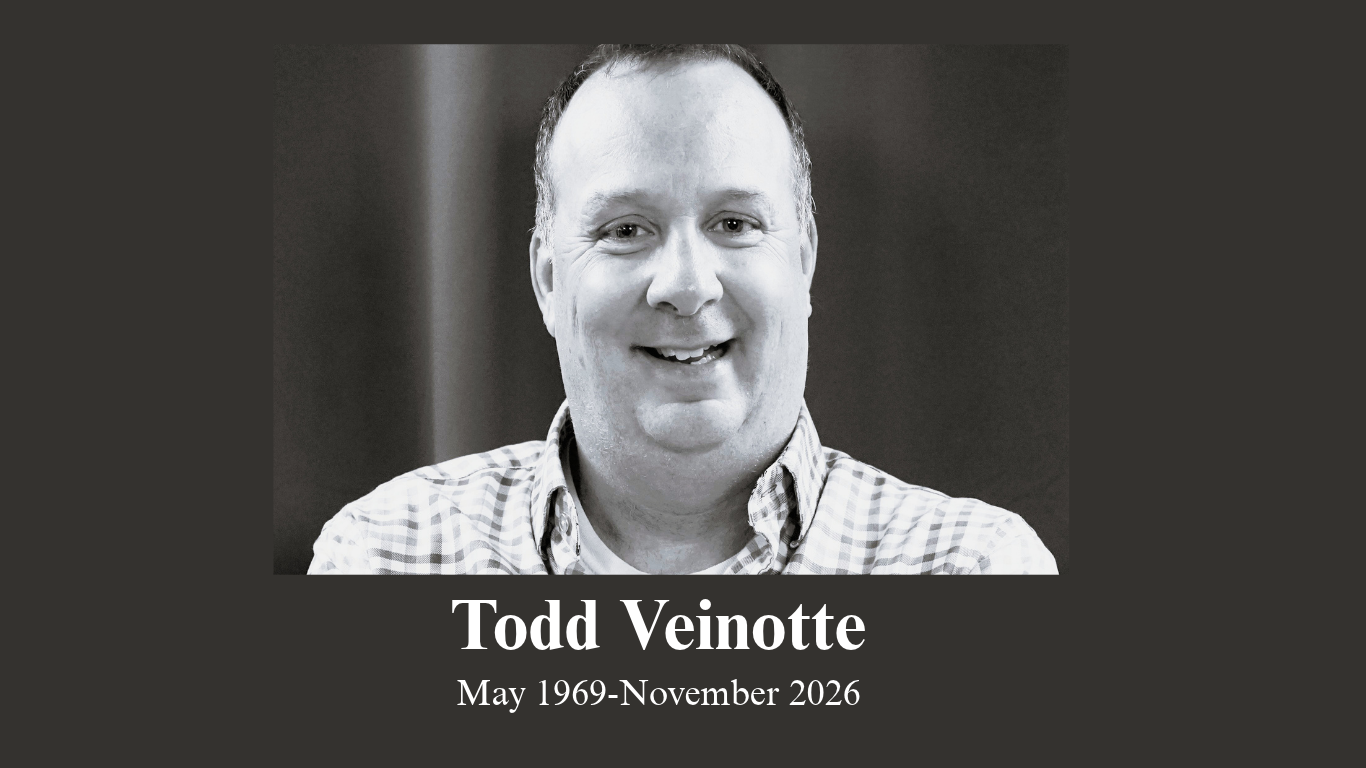
Longtime broadcaster and former co-host Mortgage 101 Todd Veinotte passed away on Nov 16

Mortgage 101 – The Cohabitation Agreement Talk
Clinton, Dan, and Danielle MacLean of DCL Law covered refinance documentation and Nova Scotia legal considerations for couples who own property or live together.
Dan Ahlstrand
And welcome back to this special edition of Mortgage 101. We’re live on Facebook and on YouTube this afternoon, Clinton. We’ve got a question on Facebook.
Clinton Wilkins
We do have a question on Facebook. What documents do you need for a refinance? I’ll answer it on my side. Maybe Danielle will let you answer on the legal side of things. When we do a refinance, it’s the same documents we would need if we were doing a purchase with the exclusion. We don’t verify the down payment as long as you’ve owned your house for more than a year. We don’t verify net worth or the down payment if we’re doing this through a regular program. So we look at your income, we look at your assets, we look at your credit, and from the assets, we’re just taking your word for it. We’re not verifying it, except that the property value would be verified in most cases. But primarily, we’re getting the income, and we’re getting the property documents, like we’re getting your mortgage statement and we’re getting your property tax bill because we want to make sure that we can understand what your current mortgage situation is, and we want to understand what’s going on with your property taxes from a cost perspective and get all that information into the system. And we ask for it up front before we submit a file for approval because there’s nothing worse than the experience for a customer: us getting an approval and then coming back to them and saying, “Ooh, maybe we can’t make this happen because we didn’t have a full scope of what the view is of the file.” So we really want to try to understand that full look before we are submitting it, and really from an income perspective and from that property details perspective. What about on the legal side of things, Danielle? What what like what type of things would a client need to bring to your office if they were doing a refinance?
Danielle MacLean
So I’ll give you the lawyer answer: it depends. That’s always a lawyer answer, but it does depend. So we get formal mortgage instructions from the lender, and then it will tell us what we need. We are always going to need proof of insurance, so your proof of insurance is always going to have to have your new lender listed as loss payee. So if the house burns down, you don’t get all the money. The lender has to get paid out first. Really, what it means. So we’re always going to need that. We’re going to need a voided check or deposit instructions so we can get you money. So, you’re getting money at the back end, hopefully, right? And also, a lot of times the lender has us collect the account that the mortgage will be debited from. We need some account numbers for the mortgage. If you have a current mortgage that we’re paying out, if we’re paying out any debts or judgments, so it really is going to depend. So what we do is we wait for those mortgage instructions, and then we reach out, and we let a client know everything that we need.
Dan Ahlstrand
As usual, the more documents that you have, the better chance of this being a successful transaction, right?
Danielle MacLean
We live in paper, right? I live in paper. I’m buried in paper, less paper roll all of the time. But you’re right; the more prepared you are, the better. Like, some clients are fantastic. They show up, they have everything that we ask for, and sometimes we’re kind of holding people’s hands, and that’s okay too. Everybody’s different. Sometimes it can be really overwhelming for people, but it’s definitely a lot of paper in my world and in Clinton’s world too.
Dan Ahlstrand
Danielle MacLean from DCL Law is our guest here on this special edition of Mortgage 101, and I’m glad that you’re here because we’ve talked about this next topic on this show a couple of different times, and when we have, I’ve got questions from people that have listened to the show after, and I know Clinton, you have as well, and that is a cohabitation agreement. First off, it’s the hot topic right now. Let’s start with the basic question: What exactly is it, and who should be using it?
Danielle MacLean
So it’s interesting because I would tell you that when I started 20 years ago, cohabitation agreements weren’t something that had a lot of questions about. And in the last five years or so, with this new generation coming up, they’re really savvy, and they understand these things a lot more. I’m getting asked all the time. So a cohabitation agreement is something that sets out your rights. So you’re going into a relationship together, and more. Maybe you’re already in a relationship, and you’re about to acquire an asset like a home or go into debt together or something like that. But it really just details what happens if things don’t work out and who’s entitled to what. So I say to my clients all the time, if I have a client coming in and they say, “Oh well, I’m just going in my name, but my partner’s gonna move in.” Well, let’s stop for a minute. Who’s putting the money in here? What happens if you split? Because who’s paying? And , you kind of they kind of pause and they go, well, I never really thought about that. The thing about a cohabitation agreement is you’re gonna be really happy if you need it, and if you don’t need it, it’s okay. It doesn’t matter. It didn’t hurt anything. So you’re never going to be sad that you have it because of where you stand. Because that’s the worst feeling, and I’ve been there. I’ve been there. We’ve been there.
Clinton Wilkins
We’ve all been we’ve all gone through breakups before.
Danielle MacLean
It is the worst feeling not knowing where you stand. But if you have this agreement, you go, okay, well, I know I owe you this, and you owe me that, and I keep this, and you keep that, and it just takes all of that pressure off, and it hopefully keeps you out of court. We can draft it. People, historically, think of a prenup, and it’s a similar thing. You can have it so that it kicks in if you get married. So it’s kind of. Same idea. It’s just that people now tend to move in together before they get married. The only thing you can’t contract out of is child support, so you can’t put in there that there’s no child support because that’s the right of a child. It’s not the right of the individuals. But we do them a lot when we have people purchasing a home together, or say mom and dad are giving $100,000 down payment, so mom wants to make sure that her daughter gets that back if things don’t work out.
Clinton Wilkins
I love it. And I get asked a lot, and I’m always like, you need to go seek the advice of a lawyer. And I think sometimes people, it’s a scary thing. It’s like, well, you don’t want to, you don’t think you’re going to break up, but it’s hard to sometimes have these conversations. But the one thing I always tell my clients is: it’s better to have the conversations up front, and it’s a lot easier to have a conversation now than when things go wrong.
Danielle MacLean
Absolutely, and that’s what I say- that same thing. I’m like, look, this is not a romantic conversation to have, but it’s to protect both of you, because it’s going to say what happens to your partner’s assets as well. Maybe your partner has a nice pension, or maybe they have other property. Maybe in the future they’re going to have a lot more. Like when I got married for the first time, I didn’t have anything. I didn’t think it mattered. Well, by the time it didn’t work out, I had all kinds of assets, so it was a very different situation. Not a romantic conversation, but a good one to have when everybody is still happy. It’s a lot harder to work things out when somebody’s feelings are hurt.
Dan Ahlstrand
So when you’re classified by Revenue Canada as being in a common-law relationship, that doesn’t protect you in court.
Danielle MacLean
So this is not legal advice. This is just general. I give you some general advice because every situation is different. Common law is a really quirky thing. It’s very broad, and it means different things depending on what kind of law, what piece of law you’re trying to fit under. So, from, like,e a pension point of view, it may mean something different. From, like,e a real estate view or an inheritance point of view, and province to province, it means something different. So, Nova Scotia common law can be really tricky. So, if you pass away without a will, under our common law, the law says you were a good friend. The end. They’re not going to inherit your home. They’re not going to inherit anything. So we hope so.
Clinton Wilkins
Prayers, basically.
Danielle MacLean
We’ve had people really caught by surprise with this. We’ve had people in 20- or 30-year relationships where their partner has passed away. They’ve had children. Their minor children have inherited the home. There’s no will. You’re dealing with the public trustee. It’s a mess, and people don’t realize that. And it’s honestly a real gap in Nova Scotia’s legislation. So it depends. And maybe it’s not an automatic entitlement to a home; if somebody’s moving in with you, it doesn’t mean they’re not going to argue that they have an entitlement to your home.
Clinton Wilkins
Exactly, and the Matrimonial Property Act does not apply in Nova Scotia unless you are married or unless you become a domestic partner. And that’s where I think people think that common law and a domestic partnership are the same thing, and they’re not. So, if let’s say someone’s not married, not on title, but they’re living in the house, and they want to become common-law, i.e., domestic partners. How would they do that?
Danielle MacLean
You mean, like, do a registered domestic partnership? So that’s something unique to Nova Scotia. So you can just go to Vital Statistics, and you file paperwork, and it’s almost like you’re opting in to the Matrimonial Property Act and the rights. It’s also very easy to undo, so it’s kind of a neat little way to kind of be married but not married.
Clinton Wilkins
You don’t have to put a ring.
Danielle MacLean
That’s something that Nova Scotia did a long time ago when we were with same-sex marriage, and they were kind of trying to find a workaround to make it fair and equitable for people. So it was a mechanism at the time for people to opt in and have the same rights because it is very different if you’re married or not married under Nova Scotia when it comes to both inheritance and property law.
Clinton Wilkins
It’s very, very, very interesting. And now one thing that’s been coming up a lot lately, and I get this question all the time, and this may tie into you being untitled, not untitled. How are you taking the title? So I know in Nova Scotia you can be a joint tenant, but you can also be tenants in common. So what would be the use case for both? And can you tell us like what what are the differences?
Danielle MacLean
So joint tenancy is something that you would see a lot of times with spouses. So that would mean, like, if my husband and I were both on title, if I passed away, it would automatically go to him. So some benefits there: you avoid probate tax. You avoid probate completely. It’s quick and it’s easy. Sometimes that works, and sometimes it doesn’t. So my property title is in my name only. It’s not in my husband’s name because he’s in a litigious business, more litigious than a law firm, if you can believe that. So he’s in a litigious business. So we keep that out of his name because then it’s not an asset there that somebody can see, and we have a side agreement for that. If something were to happen to me, sometimes joint tenancy doesn’t work. Sometimes it doesn’t work from a lending point of view. So maybe you have somebody come in, and they don’t qualify to be on the mortgage. Those make me anxious. Because it would be nice to have the spouse on title, but we can’t get them on there. So we kind of say, okay, when you’re up for renewal, have a talk with your broker, your mortgage specialist, and we’ll see if we can get you on title at that time. So joint tenancy is nice from a probate point of view. It’s clean, it’s easy, but it’s not always what people want. So say Clinton and I are buying a cottage property together. We’re friends. We each put in 50%. We would normally do something like tenants in common. So that means we each own our share.
Clinton Wilkins
So then, if something happens to you, your share would then go to your estate.
Danielle MacLean
To me, my share goes to my estate. Your share goes to your estate. Which is good and it’s bad because then when I pass away, Clinton owns half of a cottage with my children. My children are lovely, but I don’t know if you want to own a cottage with my children.
Clinton Wilkins
Well, they might, and they may or may not like me in 20-30 years. Who knows, right?
Danielle MacLean
Then we can get in again. You can do agreements for that to say what happens if someone were to pass away. So, tenants in common can be a nice tool for that. We’ve been using tenants in common more now as well. When we get into this provincial transfer tax, it can be a mechanism to help reduce your transfer tax if we have to have a non-resident on title.
Dan Ahlstrand
We’re going to take another break and listen to a special live edition of Mortgage 101 on Facebook and on YouTube.

Related Posts